
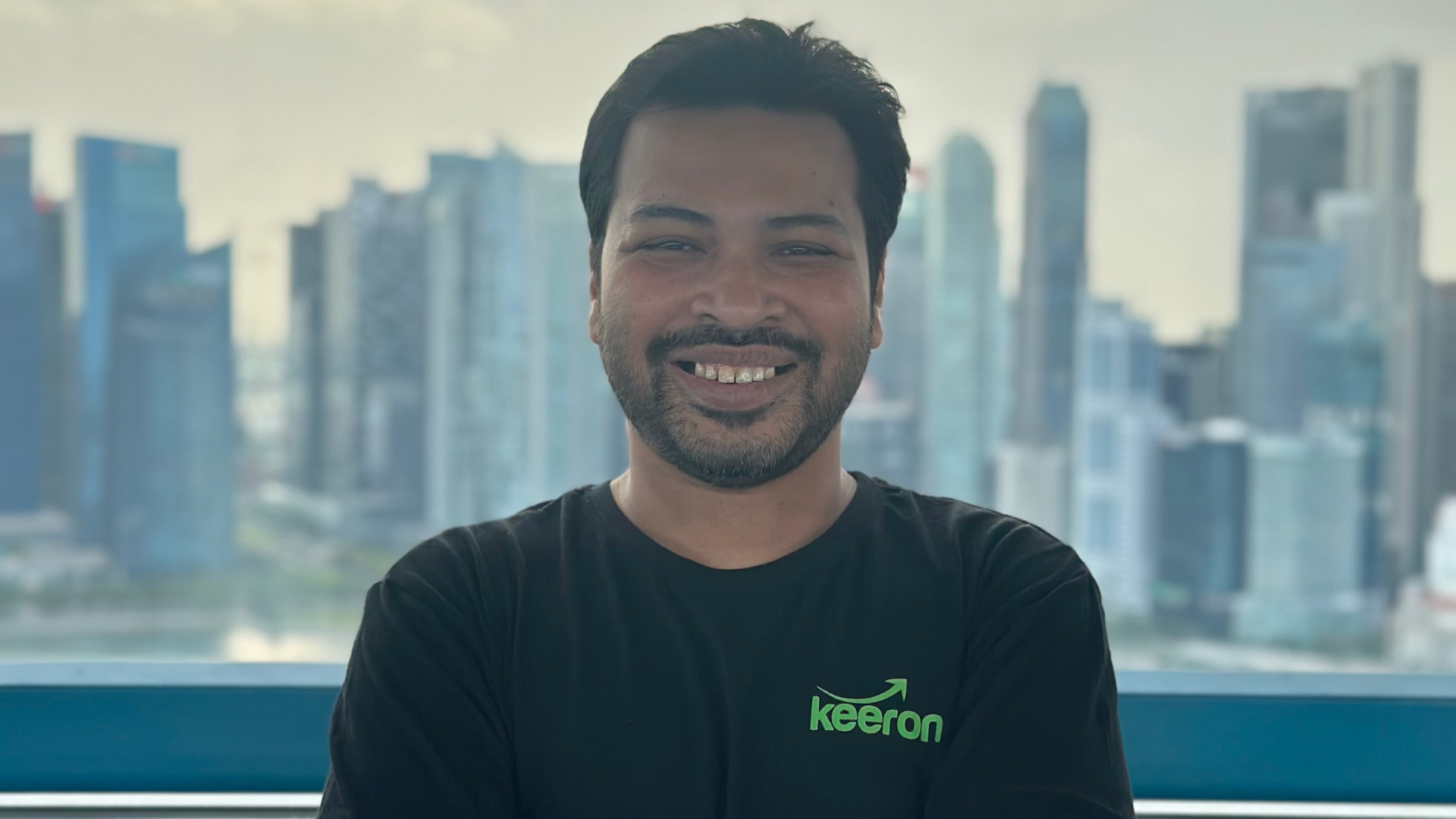
Today we are in touch with Md Tajdin Hassan, the Chief Operating Officer of Keeron, an upskilling platform in Bangladesh. Tajdin previously worked for a number of multinational companies, after which he initiated Keeron from scratch. In this interview, Tajdin spoke about the journey so far at Keeron, and the strategies he and his team are curating, to contribute to building the next leaders of Bangladesh.
In an industry filled with traditional educational methods, Keeron stands out by redefining learning for professionals. Can you talk about a specific time when Keeron decided to go against the grain, perhaps taking a risk that others might have avoided?
One significant instance where Keeron chose to move from conventional practices and embraced the risk is when we introduced the learning platform targeting only professionals. In a country where more than 10 billion dollars are taken away by foreign professionals, especially at a time when we are suffering from a dollar crisis, I think this platform was long awaited since it is helping build the young professionals and make them ready for leadership positions that expats are now holding in Bangladesh. Despite the fact that upskilling a platform online isn’t easy, Keeron is out with the vision to democratize learning.
Looking at the fast-changing skill landscape, how does Keeron anticipate the ‘next big thing’ in professional development? Is there a particular sector you’re focusing on for the future?
A major challenge for upskilling platform has always been the rate of course completion. Addressing that, we have launched cohort based learning. The learners go through the entire course over a few months, followed up by an offline meetup with the mentors over an event, and a graduation program for the skills they’re acquiring. We’re constantly trying to figure out ways to make this experience more holistic, connecting these aspirants with more employment opportunities. In a month or so, we are planning to launch our career placement services, which will connect the learners with potential opportunities. We really need to focus on building our next leaders to fill up the leadership positions, as I was mentioning earlier. Sector wise, industries like RMG where lots of expats are working, is something we’re targeting. We’re also focusing on the logistics sector, FMCG, B2B, financial, and tech.
While Keeron is focused on transforming the professional landscape in Bangladesh, do you see a future where your learning solutions transcend geographical boundaries? What would be the first steps towards such an expansion?

The problem that we’re addressing, it’s more or less similar across South Asia, and to some extent, globally. If we pick Bangladesh as an example, we can see people immigrating to other countries for better opportunities, for higher studies, and not coming back. That actually creates a scarcity of mid level talent. I heard about the talent crisis when I traveled to the U.S. and Europe as well. This crisis is existing over the world, so the product that we’re building can obviously be a solution beyond the geographical boundaries. To bring up an example, our product management course has been conducted by someone who used to work for Microsoft at Seattle as a Product Manager. Thus, our learners were really enthusiastic to enrol in the course by someone who had experience at one of the top companies across the globe. To give an idea about the tractions, we do see learners purchasing our courses from Australia and U.S. That’s a good sign, but for now our focus is on the local market. Undoubtedly, the opportunities are immense when we think about exceeding the boundaries, but the first step towards such an expansion is to understand the local challenges first.
Online learning platforms often face challenges with keeping users motivated and engaged over time. What unique strategies has Keeron employed to tackle this issue, and can you share any success stories?
This is the biggest challenge, to keep learners motivated and engaged over time. That’s why, from recorded courses, we launched cohort based courses. After launching cohort based courses, we noticed a rise in participation rate, which is measurable. However, as recorded courses play a majority role in the entire process of learning, we asked our learners to complete the course and share their completion journey on LinkedIn, with the incentive to get an invitation to our events, or discounted prices for our next courses; though the number isn’t big, we do see people doing that and the number is eventually growing. Gradually, such initiatives with incentives will encourage them, since they also want to be a part of the bigger community.
Starting an edtech platform is as much an entrepreneurial journey as it is an educational mission. Can you share a critical turning point in Keeron’s journey so far?
It’s more than entrepreneurship, it’s more than running a startup. At the end of the day, how you run the edtech platform, how you acquire customers and engage them, it all eventually depends on the financial strength. How effectively you can utilize the resources, that depend on your entrepreneurial capabilities. For Keeron’s journey so far, we had a profitability enabled mindset since day one. We also ensured that our dependency doesn’t get diverted towards burning money, but depend on our own channels because the eventual goal is to treat this with a pure business mindset. We did a few experiments across paid channels by cutting the budget after first quarter and building organic channels. The results wasn’t the same, but way better. With less money, we achieved better results.

Any message to the future learners of Keeron?
As our learners are mainly from the local market, I will make a suggestion for the people who are purchasing courses from us in Bangladesh. Keeron learners have the ability to play a major role of the big pool currently filled with foreign expats which I shared earlier. It’s not a marathon race, but rather, a continous process of self improvement. We should be determined that we will be replacing those positions in the future and create a strong foothold and legacy for the future learners to come.


