
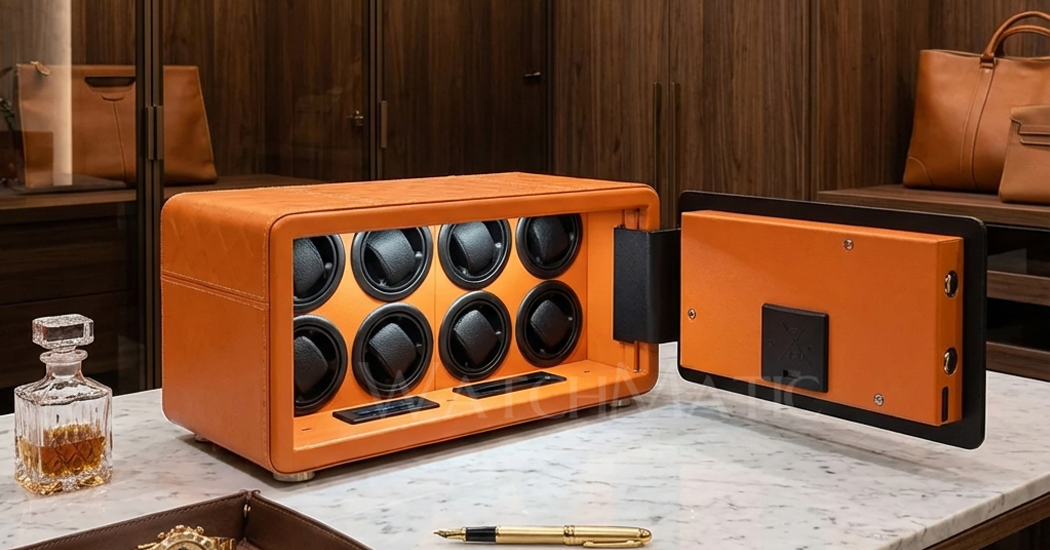
Automatic watches are admired not only for their craftsmanship, but for the engineering philosophy behind them. Designed to be powered by movement, these watches raise a common question among collectors and first-time buyers alike: What exactly does a watch winder do – and just as importantly, what doesn’t it do?
Understanding this distinction is critical, especially in a market where watch winders are often misunderstood, oversold, or treated as mandatory accessories. In reality, a watch winder is neither a miracle device nor a simple luxury display piece. Its true value lies somewhere in between.
The Real Purpose of a Watch Winder
At its core, a watch winder is designed to maintain the power reserve of an automatic watch when it is not being worn. By rotating the watch periodically, the winder simulates wrist movement, allowing the rotor inside the watch to keep the mainspring wound.
For collectors who rotate multiple watches throughout the week, this serves a practical function: the watch remains ready to wear without requiring manual winding or resetting complications such as date, GMT, or moonphase.

This is the philosophy embraced by brands like WatchMatic where watch winders are positioned as ownership tools rather than status accessories.
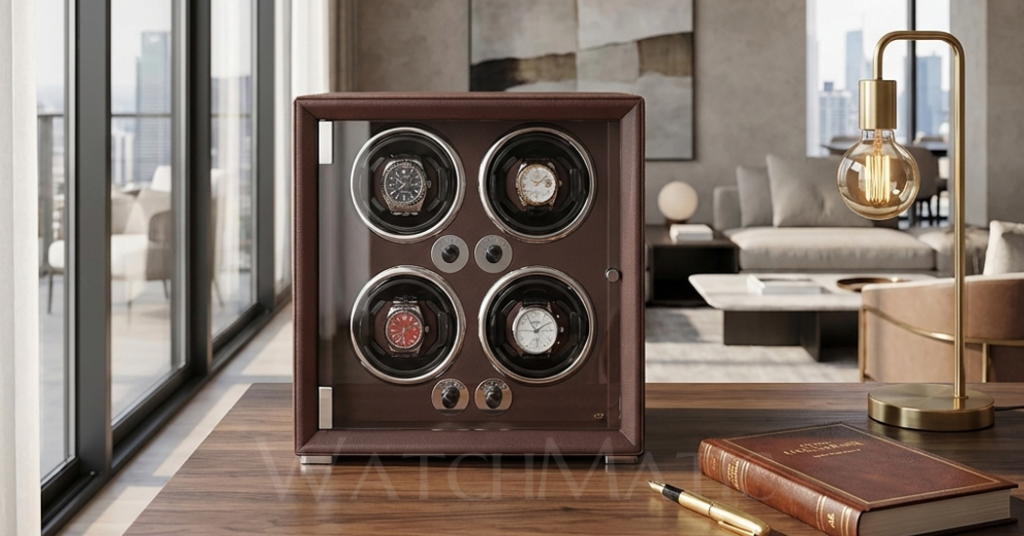
What a Watch Winder Does Well
When properly designed and correctly configured, a watch winder can:
- Maintain power reserve for automatic movements
- Reduce frequent manual winding and resetting
- Support watches with complex complications
- Help collectors manage multi-watch rotations
- Keep watches ready for immediate wear
Importantly, a watch winder does not increase accuracy, improve movement performance, or replace proper servicing. It simply keeps the watch operating within its intended design parameters when off the wrist.
Why Settings Matter More Than Constant Motion
One of the most common misconceptions is that more rotation equals better performance. Incorrect settings can be counterproductive.

Each automatic movement is designed with specific requirements:
- Turns Per Day (TPD)
- Rotation direction (clockwise, counterclockwise, or bi-directional)
- Rest intervals between cycles
A well-designed winder focuses on controlled, purposeful movement – not continuous spinning. This is why collectors increasingly seek educational resources like understanding watch winder settings to ensure their watches are supported correctly.
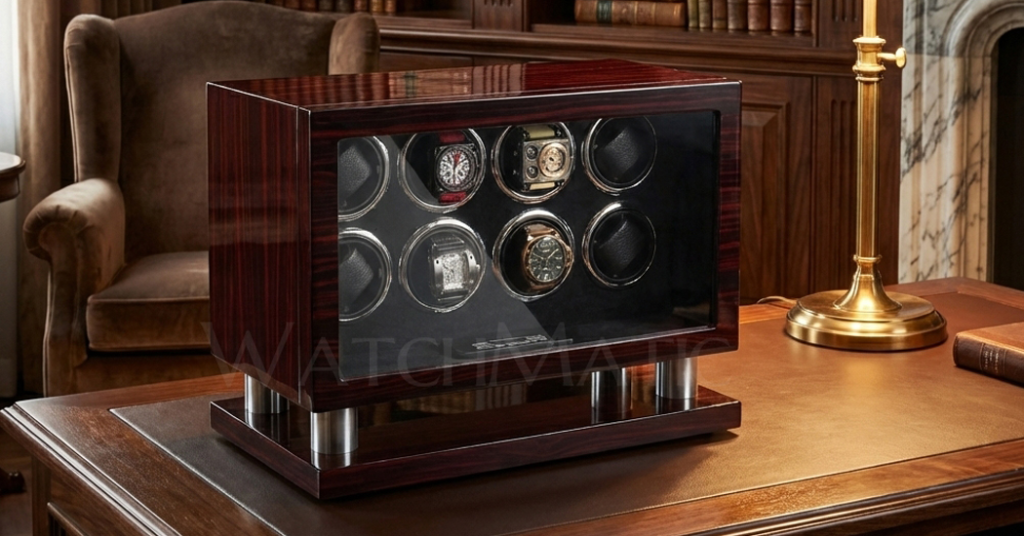
What Watch Winders Do Not Do
To avoid unrealistic expectations, it’s equally important to understand what watch winders do not provide:
- They do not regulate timekeeping accuracy
- They do not prevent mechanical wear
- They do not replace servicing or lubrication
- They do not improve power reserve beyond design limits
- They do not protect against environmental damage
A watch winder keeps a watch running – nothing more, nothing less.
Where Quality Makes the Difference
The real distinction between entry-level and collector-grade winders lies in control and consistency. Features such as independent motor control, programmable settings, quiet operation, and proper rest cycles are what separate functional tools from decorative devices.
Collectors managing mixed brands and movements often gravitate toward independent control watch winders because flexibility matters more than aesthetics alone.
The Bottom Line
A watch winder is best understood as a convenience tool, not a necessity. For some owners, manual winding is perfectly sufficient. For others — especially those with rotating collections or complication-heavy watches – a well-designed winder simplifies ownership and preserves usability.
The key is clarity: knowing what a watch winder is designed to do and resisting claims that go beyond its mechanical purpose. When used correctly, it becomes a quiet, reliable companion to automatic watch ownership – nothing more, and nothing less.


